
President John Dramani Mahama, has sharply criticized former U.S. President Donald Trump over his recent claims against South African President Cyril
President John Dramani Mahama, has sharply criticized former U.S. President Donald Trump over his recent claims against South African President Cyril Ramaphosa, describing Trump’s rhetoric as not only inaccurate but deeply insulting to the collective memory and dignity of Africans.
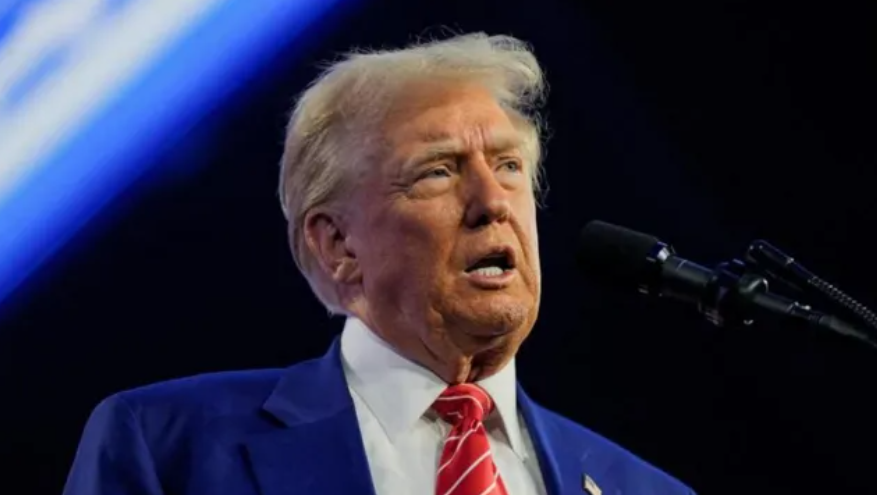
John Mahama’s reaction comes amid growing backlash over Trump’s unfounded allegations of “white genocide” in South Africa, during a controversial meeting with President Ramaphosa at the White House.
While Donald Trump used the platform to revive racially charged narratives and reportedly displayed misleading images—some of which were later revealed to be from the Democratic Republic of Congo—Mahama contextualized the episode as part of a broader pattern of historical distortion and global misinformation.
Challenging Historical Revisionism
Mahama in a statement emphasized that Trump’s claims stood in stark contrast to the brutal history of colonization and apartheid that defined South Africa’s past.
“To allege white genocide while ignoring centuries of institutional racial oppression is a dangerous rewriting of history,” Mahama noted.
He reminded the world that apartheid, a system of racial segregation enforced by law, only ended in the early 1990s following years of struggle, bloodshed, and global solidarity movements.
John Mahama recounted his own emotional reaction to the 1976 Soweto Uprising, where hundreds of schoolchildren protesting for educational freedom were gunned down by apartheid police.
“These were not ancient events—they are within living memory. And they are part of our collective African history,” Mahama said, arguing that any attempt to obscure or distort these truths is an insult to the victims and survivors.
Regional and Pan-African Stand
The Ghanaian leader used the opportunity to draw parallels between Ghana’s early independence journey and South Africa’s liberation, emphasizing Pan-African solidarity.
He recalled how Ghana, under Kwame Nkrumah, was among the first African nations to openly support anti-apartheid resistance, offering refuge and assistance to South African exiles.
“Our independence was never just for ourselves,” Mahama said. “It was always in service of the greater African cause.”
He argued that because African nations share intertwined histories and struggles, attacks on one African leader or nation are felt across the continent.
“When Ramaphosa is blindsided with baseless allegations, it is not only South Africa that is under attack—it is all of us.”
Beyond the inflammatory language, Mahama raised concern about the tangible implications of Trump’s resurgence on the global stage, including trade tensions and policies that disproportionately hurt African economies.
He referenced past tariff regimes and travel bans during Trump’s presidency that affected students, businesses, and African migrants.
“Increasing tariffs and suspending visa services under the guise of national security or trade balance only masks a deeper disregard for African progress,” Mahama noted. “It is not just about diplomacy—it is about equity, justice, and respect.”
He warned that such economic isolationist tactics, often paired with misinformation, could have real consequences on already fragile economies across the continent.
Exposing the Reality Behind the Rhetoric
Mahama’s piece also sought to expose what he described as “double standards” in Trump’s worldview.
He pointed out that while Afrikaner enclaves such as Orania and Kleinfontein still exist in South Africa—operating in near-separatist isolation with their own currencies, schools, and cultural rules—no alarm is raised by global powers about reverse racism or discrimination.
“If Afrikaners were in any real danger, they have places of retreat within South Africa itself. So why raise the specter of genocide if not to stoke fear and division?” Mahama questioned.
Call to Defend African Memory and Progress
Citing renowned African writer Ngũgĩ wa Thiong’o and Archbishop Desmond Tutu, Mahama closed by urging Africans to protect their historical truth and push back against attempts to manipulate global narratives.
He emphasized that memory is a powerful tool of resistance and self-identity.
“Africa is not perfect, but it is progressing. What we cannot allow is for our history to be erased or rewritten for political theater,” he said.
In the face of global instability, from the mines of Congo to the conflict zones of Sudan, Mahama urged African leaders and citizens to remain united and vigilant.
“We must journey forward with our heads high and our truth intact. The world may seek to distract or divide us, but we owe it to those who came before us—and to the children yet unborn—to defend our story.”

COMMENTS