
A sweeping investigation has uncovered what appears to be one of the most explosive governance crises within a state institution in recent years—an al
A sweeping investigation has uncovered what appears to be one of the most explosive governance crises within a state institution in recent years—an alleged attempt by the new leadership of the Minerals Income Investment Fund (MIIF) to rewrite already-signed audited financial statements and frame former executi ves for corruption and mismanagement that auditors say never occurred.
What began months ago as a seemingly routine change in leadership has now spiraled into a scandal involving fabricated narratives, alleged manipulation of state investigative bodies, internal intimidation, and a brazen effort to convince the Auditor-General to alter a finalised audit report in violation of Ghana’s financial accountability laws.
A Narrative Built On Manufactured Mismanagement
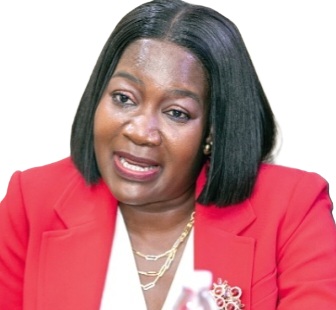
Shortly after assuming office, the new MIIF CEO, Justina Nelson, and the board embarked on an aggressive campaign branding the previous management as corrupt and irresponsible.
According to multiple sources across MIIF, Parliament, and national investigative bodies, the new leadership circulated claims that billions of cedis had been mismanaged by the outgoing administration.
The narrative dominated internal meetings, public engagements, and even state security operations. The Office of the Special Prosecutor (OSP) and the Economic and Organised Crime Office (EOCO) made high-profile arrests of former MIIF board members, senior executives, and external business partners—all based on financial statements drafted by MIIF’s new management, not independently verified records.
But insiders say those statements were engineered to portray losses that did not exist.
Many staff who raised concerns were fired, with several now suing MIIF for wrongful termination and victimisation.
The Audit That Disproved the Allegations
When the new management’s financial statements were submitted to the Auditor-General for the mandatory statutory audit, the outcome was the opposite of what MIIF leadership had projected.
Auditor-General officials concluded that MIIF had been prudently managed and had recorded significant profits.
The numbers contradicted the “mismanagement” narrative that had been fed to the public, media, and investigative bodies.
Independent auditors consulted by this newspaper confirmed that the 2024 audit evidence showed strong investment returns and competent financial stewardship.
Despite the audit’s conclusions, MIIF leadership signed the audited financial statements on 26 June 2025, with the Auditor-General signing them on 27 June 2025.
The findings effectively collapsed the new management’s claims of prior mismanagement.
Media Publications Trigger Backlash And Retaliation
Once portions of the audited statements began circulating in media and political circles, several outlets published stories highlighting MIIF’s profitability—including a widely-shared analysis by Okaikwei Central MP, Patrick Boamah.
Sources say the CEO allegedly instructed her Corporate Affairs Directorate to issue rejoinders discrediting financial figures she herself had already signed.
In a further escalatory move, she allegedly compiled a selective list of former board members and forwarded it to the OSP—resulting in targeted arrests that excluded other insiders with identical responsibilities.
One senior insider described the process as “weaponised law enforcement designed to validate a false narrative.”
The Attempt to Rewrite a Signed Audit Report
As the discredited narrative weakened, a former board member filed an RTI request in September 2025 seeking the 2024 audited financial statements. MIIF ignored the request, then ignored a second request, and later refused to respond to internal review demands—clear breaches of both the RTI Act and the MIIF Act.
Then came the most extraordinary development.
On 31 October 2025, MIIF wrote to the Audit Service claiming the signed statements contained “material and pervasive misstatements capable of misleading users,” and demanded that the already-signed audit be rewritten.
This request came four months after the audit was finalised and mere weeks after MIIF’s refusal to release it through RTI channels.
On 7 November 2025, MIIF officials met with the Audit Service to attempt negotiations for a restatement—an unprecedented move in the public financial management history.
The Auditor-General rejected the request outright.
In a letter dated 12 November 2025 and delivered to MIIF the following day, the Audit Service delivered a blistering rebuttal:
The 2024 statements did not contain any “material” or “pervasive” misstatements.
MIIF’s claims were misleading and lacked factual basis.
The request to rewrite a completed audit was improper and unacceptable.
The Audit Service would not alter any aspect of the signed 2024 audit.
Assistance could only be provided during the 2025 audit—not to retroactively distort historical records.
MIIF confirmed receipt of the letter but declined to comment, saying the communication was “confidential,” when the media contacted the organization.
MIIF, established to manage Ghana’s mineral revenues transparently and independently, is now engulfed in allegations of fabricated corruption narratives, misuse of state investigative bodies, internal intimidation and targeted arrests, manipulation of financial statements, attempts to rewrite an auditor-signed financial report, repeated violations of the RTI Act and MIIF Act.
These are not administrative errors. They represent a crisis of institutional credibility that threatens the integrity of one of the most important sovereign investment vehicles.

COMMENTS