
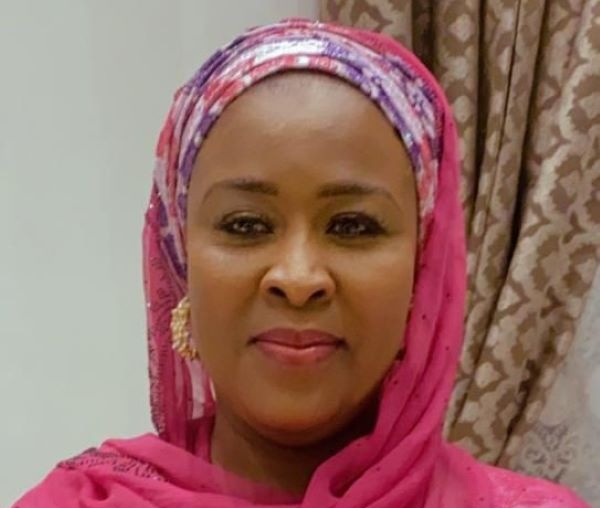
A senior branch women’s organizer of the National Democratic Congress (NDC), Sambo Fuseina, has publicly criticized what she describes as a “blatant a
A senior branch women’s organizer of the National Democratic Congress (NDC), Sambo Fuseina, has publicly criticized what she describes as a “blatant act of nepotism and political indulgence” following the appointment of Amina Nassar, wife of the East Ayawaso Member of Parliament (MP), to the Hajj Board.
The appointment has sparked concerns over fairness, meritocracy, and public accountability within the governing party.
Madam Nassar, already serving on the governing board of Sankofa Gold, was recently added to the Hajj Board—a move Fuseina argues represents a troubling pattern of political favoritism.
In a press statement circulated on social media, Fuseina contended that the decision undermines the principles of fairness and integrity in public appointments.
“This appointment tramples on the dignity of public office and sends the horrifying message that family proximity to political power now outweighs years of sacrifice and loyalty to the party,” she wrote.
Fuseina, a committed member of the NDC, emphasized that public office is a trust, not a family entitlement. Citing the Public Office Conduct Act of 1993 and the Companies Act of 2019, she warned that dual appointments such as Madam Nassar’s risk violating standards of independence, fiduciary responsibility, and conflict-of-interest avoidance.
“This is not good governance. This is not party loyalty. This is political indulgence wrapped boldly in nepotism, and this is never what we promised our branch and ward executives,” Fuseina said
The women’s organizer expressed frustration that many grassroots party activists, who contributed significantly to the NDC’s victory in the 2024 elections, have been overlooked in favor of politically connected individuals.
While Fuseina did not name specific grassroots members, she highlighted the sacrifices of party loyalists in Zongo communities, noting that they “sacrificed their energy, time and resources for the Mahama comeback” yet remain unrecognized.
She described the appointment as “an insult” and “a slap in the face” to ordinary party foot soldiers, arguing that it threatens internal cohesion and risks eroding public confidence.
“It stains the image of the government. It sends the wrong signal to the grassroots. It erodes unity and creates unnecessary anger within the rank and file,” Fuseina asserted.
Calling for immediate action, Fuseina urged the party and government to reverse the appointment, stating, “This is the time to correct the error. Not tomorrow. Not next week. Now.”
The statement has already sparked debate among NDC supporters on social media.
Some have rallied behind Fuseina’s call for fairness in public appointments, while others questioned the decision-making processes within the presidency that led to the controversial appointment.
The NDC, which returned to power following the 2024 elections, has faced earlier criticisms over appointments perceived as favoring party insiders or politically connected individuals. Previous controversies around board appointments and senior administrative postings have raised questions about whether merit-based selection is consistently upheld.
The current statement by Fuseina adds to the growing calls for reform in the party’s approach to public service appointments, particularly in sensitive national bodies such as the Hajj Board.

COMMENTS