
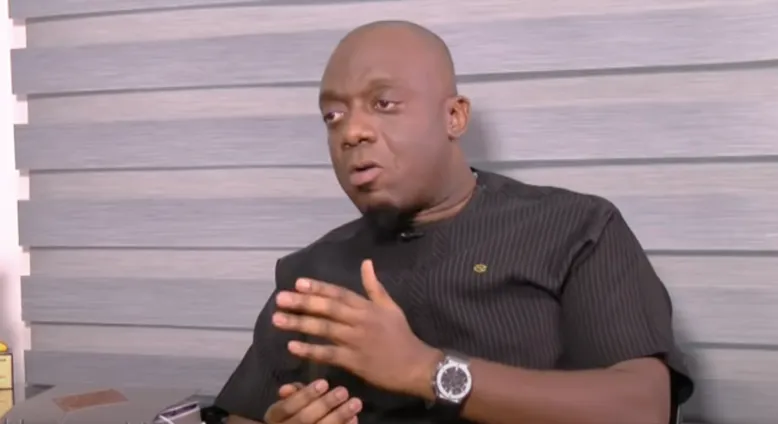
The New Patriotic Party (NPP) has moved to calm growing internal tensions over the composition of its newly announced standing and sector committees,
The New Patriotic Party (NPP) has moved to calm growing internal tensions over the composition of its newly announced standing and sector committees, with the party’s General Secretary, Justin Kodua Frimpong, defending the appointments as constitutional, strategic, and necessary for the party’s rebuilding process ahead of the 2028 general elections.
The clarification comes days after sections of party supporters, grassroots activists, and some communicators expressed mixed reactions following the announcement of the committees approved by the party’s National Executive Committee (NEC) and National Council.
While many members welcomed the appointments as a step toward reorganizing the party after its defeat in the 2024 elections, others questioned the timing, selection process, and omission of some influential party figures and grassroots operatives.
Speaking during a social media briefing on Sunday, May 10, Justin Kodua Frimpong insisted that the formation of the committees was fully grounded in the party’s constitution and formed part of a long-standing institutional tradition within the NPP.
According to him, the decision followed deliberations by both the National Executive Committee and the National Council during meetings held last Thursday, where the party leadership approved the establishment and restructuring of the various standing and sector committees.
He cited Article 10(6)(2) of the NPP constitution, explaining that the National Council has the constitutional authority to constitute, review, and populate such committees whenever necessary.
“Last week Thursday, the National Executive Committee and subsequently the National Council met and in line with the party’s constitution formed the various standing committees of the party,” he stated.
Justin Kodua rejected claims by some party members that the leadership should have delayed the appointments until a later stage in the party’s reorganization process.
According to him, recent constitutional amendments and internal reforms made it necessary for the committees to be constituted immediately.
“We cannot say that we are waiting for a later date before we constitute these committees,” he stressed.
The controversy emerged shortly after the party announced seven standing committees and 23 sector committees as part of a major organizational restructuring exercise being spearheaded by the NPP leadership and the party’s 2028 Presidential Candidate, Mahamudu Bawumia.
The committees include influential figures within the party such as Kennedy Ohene Agyapong, Bryan Acheampong, Yaw Osei Adutwum, Kojo Oppong Nkrumah, and Kwabena Agyei Agyepong, many of whom either contested internal positions in the past or played key roles in the party’s previous governments.
The appointments were designed to promote inclusiveness and reduce internal divisions following the NPP’s highly competitive presidential primary and eventual electoral defeat in 2024.
Former Contenders
One of the notable features of the restructuring exercise was Dr. Bawumia’s decision to appoint several former presidential primary contenders and influential party figures into strategic leadership positions within the policy committees.
Kennedy Agyapong, who contested Dr. Bawumia during the party’s presidential primary, was appointed Co-Chair of the Employment and Jobs Committee, while Bryan Acheampong was named Co-Chair of the Security, Intelligence and Defence Committee.
Former Education Minister Dr. Yaw Osei Adutwum was appointed Co-Chair of the Education Committee, while former NPP General Secretary Kwabena Agyei Agyepong was named Co-Chair of the Roads Committee.
Party insiders believe the appointments were intended to project unity and bring together different factions within the NPP as the party prepares for the next electoral cycle.
However, the announcement also triggered dissatisfaction among some party communicators and grassroots members, particularly on social media, where some activists openly questioned the exclusion of certain loyalists from leadership positions.
Some critics accused sections of the leadership of rewarding a select few while sidelining others who had worked tirelessly for the party over the years.
Despite the criticism, several senior party members and analysts have described the reactions as part of normal internal political dynamics within a major political organization undergoing reorganization after electoral defeat.
Justin Kodua Frimpong also sought to clarify confusion surrounding the composition of the committees, explaining that the list initially circulated publicly represented only the leadership or “lead persons” of the various sector committees and not the complete membership.
“The list that came out on the first day has to do with the leads of the sector committees but not the total membership,” he explained.
According to him, the full membership of the committees would be officially inaugurated on May 25, after which the various committees would begin full operations across critical sectors of the economy and governance.
He further noted that the restructuring process was intended to harness expertise from both within and outside Parliament, bringing together professionals, technocrats, grassroots organizers, former ministers, Members of Parliament, communicators, and policy experts to contribute to rebuilding the party.
Kodua also traced the history of the sector committees to the early 1990s, explaining that the NPP originally established such structures to strengthen policy development and provide alternatives to the then-ruling National Democratic Congress (NDC).
“The sector committees were created as far back in the 1990s when we realized that we couldn’t leave the NDC alone to govern this country and make mistakes,” he stated.
“At that time, people referred to the NPP as having the men,” he added.
According to him, although the committees remained in existence during the years the NPP was in government, the latest reforms are aimed at revitalizing their relevance, expanding participation, and strengthening policy coordination in opposition.
The reorganization exercise is expected to shape the party’s policy direction, campaign strategy, stakeholder engagement, and grassroots mobilization efforts over the next two years as the NPP attempts to regroup and mount a strong political comeback.

COMMENTS