
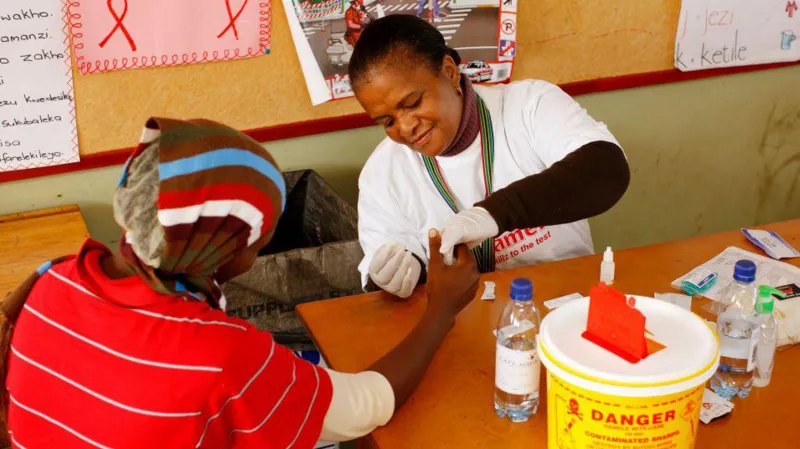
The United States has begun phasing out HIV/AIDS funding for South Africa, citing political concerns, leaving the country scrambling to fill a massive
The United States has begun phasing out HIV/AIDS funding for South Africa, citing political concerns, leaving the country scrambling to fill a massive financial gap in its health system.
South Africa, home to the world’s largest HIV-positive population, is now redirecting billions of rand to sustain treatment and prevention programmes. Experts warn the cuts could reverse years of progress in combating the epidemic
U.S. Decision to Withdraw Funding
The Trump administration announced it would terminate PEPFAR (President’s Emergency Plan for AIDS Relief) support in South Africa, accusing the government of failing to meet policy demands related to alleged discrimination against the white Afrikaner minority. South Africa had been one of the largest beneficiaries of PEPFAR, receiving $456 million in 2024, which dropped to $213 million in 2025, and only $25 million so far in 2026. The U.S. State Department argued that South Africa, as a middle-income country, should be able to finance its own health programmes.
South Africa’s Response
In reaction, Finance Minister Enoch Godongwana announced R26 billion (about $1.4 billion) will be allocated to provinces to bolster HIV/AIDS programmes, including antiretroviral provision and prevention of mother-to-child transmission. Additionally, R410 million has been redirected to the South African Medical Research Council to sustain critical HIV research previously funded by the U.S. This reallocation is part of a broader effort to ensure continuity of services and avoid disruption in treatment for millions of patients.
Impact on HIV Services
Despite South Africa’s efforts, the funding cuts are already straining the health system. A report by Physicians for Human Rights warns that the U.S. withdrawal is dismantling decades of investment, undermining HIV testing, outreach, and community-based clinics. Vulnerable groups such as LGBTQI+ communities and sex workers are disproportionately affected, with many losing access to essential services. The timing is particularly damaging as new prevention tools like lenacapavir, a twice-yearly injectable, are becoming available but risk limited uptake without U.S.-funded outreach programmes. Experts caution that without sustained international support, South Africa’s hard-won progress in HIV control could be reversed.

COMMENTS