
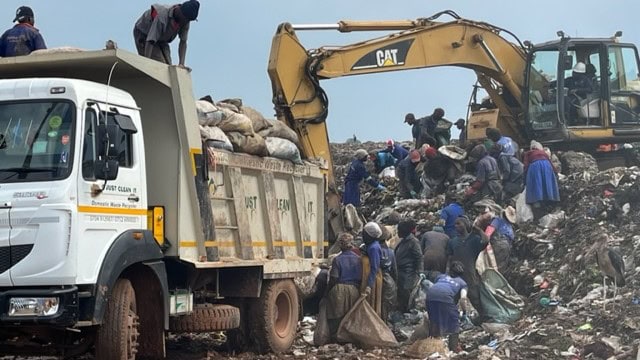
Kumasi needs at least four to five strategically located waste transfer stations to improve waste collection, reduce pressure on disposal systems and
Kumasi needs at least four to five strategically located waste transfer stations to improve waste collection, reduce pressure on disposal systems and strengthen the city’s ability to respond to growing environmental and climate-related challenges, the Environmental Service Providers Association (ESPA) has said.
The Executive Secretary of ESPA, Ama Ofori Antwi, said the absence of a waste transfer station in the Ashanti Regional capital is a major gap in the city’s waste management infrastructure.
“Kumasi, for instance, doesn’t have a transfer station at all. So, if the government can put up about four or five transfer stations there, it will be very good,” she said.
Waste transfer stations serve as intermediate points where waste collected from communities can be consolidated before being transported to final disposal or treatment facilities. Properly planned, they can reduce long-distance hauling, improve collection efficiency and help cities manage increasing volumes of municipal waste.

Accra infrastructure also under pressure
Mrs Ofori Antwi said Accra is facing similar pressure, despite having existing transfer facilities.
She noted that the capital currently has about six transfer stations, but these facilities are already experiencing significant pressure from the volume of waste generated across the metropolis.
“I know in Accra, we have about six, so the government can add another four or six so that in that way we can be able to contain the waste,” she said.
Her comments come as government moves to expand the country’s waste transfer infrastructure as part of efforts to improve the collection, transportation and disposal of municipal waste.
Climate planning must influence waste infrastructure
For climate-conscious urban development, however, the expansion of transfer stations cannot be based solely on the number of facilities required.
Mrs Ofori Antwi urged authorities to consider the specific characteristics of each community before deciding where facilities should be located.
She questioned proposals for waste transfer stations to be established at five-kilometre intervals, arguing that factors including population density, land availability, settlement patterns and proximity to residential communities must inform the planning process.
This is particularly important as poorly managed waste can contribute to blocked drains, flooding, water pollution, unpleasant odours and other environmental and public health risks.
Ghana’s rapidly expanding urban centres are also generating increasing quantities of municipal waste, placing pressure on collection systems, disposal sites and local authorities.
Avoid creating new environmental problems
Mrs Ofori Antwi cautioned that while transfer stations are necessary, their locations must be carefully selected to avoid creating new environmental problems for communities.
Facilities located too close to homes and other sensitive areas could generate nuisance and resistance from residents and landowners, particularly where there has been inadequate consultation.
She therefore called for extensive stakeholder engagement before land is acquired and construction begins.
According to her, densely populated communities should receive priority, but this must be balanced with environmental safeguards and adequate buffer zones around residential areas.
MMDCEs tasked to identify land
Meanwhile, the Minister for Local Government, Chieftaincy and Religious Affairs, Mahama Ayariga, has directed Metropolitan, Municipal and District Chief Executives (MMDCEs) to identify suitable land for the development of waste transfer stations.
The directive forms part of broader government efforts to strengthen waste collection and disposal systems across Ghana.
For cities such as Kumasi and Accra, the challenge goes beyond simply increasing the number of waste facilities.
Urban planners and environmental managers face the larger task of building waste systems that can cope with population growth while reducing pollution, protecting waterways, supporting cleaner communities and improving resilience to climate-related risks.
The proposed expansion of transfer stations therefore presents an opportunity for Ghana to rethink municipal waste management as an essential component of climate resilience and sustainable urban development, rather than treating waste only as a sanitation issue.

COMMENTS