
Nigeria is proposing to cap petrol prices at about 1,350 naira ($1.02) per litre, asking refiners and fuel importers to absorb temporary increases and
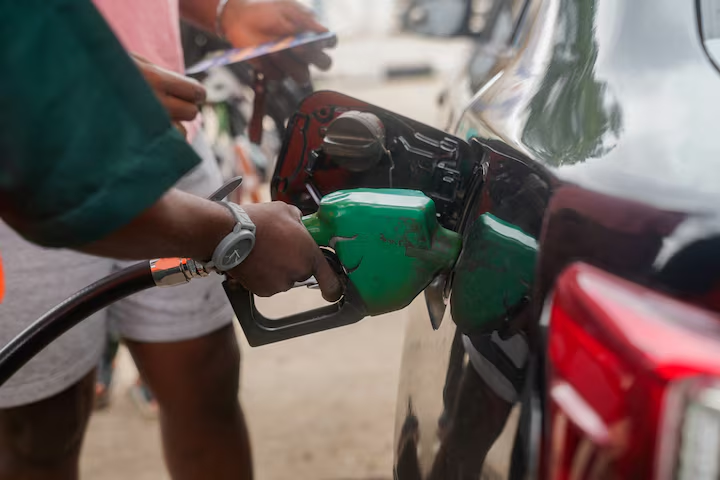
Nigeria is proposing to cap petrol prices at about 1,350 naira ($1.02) per litre, asking refiners and fuel importers to absorb temporary increases and recoup the losses once costs ease, the finance minister said on Thursday.
Taiwo Oyedele announced the plan at a press conference in Abuja, describing it as “price modulation.”
He clarified that the figure is a ceiling on the ex-gantry, or landing, cost of petrol before other costs are added, not the expected pump price at filling stations. Oyedele said the arrangement is neither a subsidy nor price control.
Oyedele said the aim is to smooth prices over time, not suppress them.
He argued that a steady 1,400 naira a litre is better than 1,500 naira today and 1,300 tomorrow, because volatility adds to uncertainty and fuel prices rarely fall as fast as they rise.
Petrol prices currently average about 1,400 naira per litre, up from roughly 830 naira before a conflict pushed up international crude prices. The government is also offering a 30-day discount on petrol sold by NNPC Limited, with priority for public transporters nationwide.
It also plans forward sales of crude oil to domestic refineries to shield pump prices from swings in the international market.
The measures come as fuel costs strain households and businesses and the subsidy debate returns to politics. Presidential candidates Atiku Abubakar and Peter Obi have both promised to restore the subsidy if elected in 2027.
Oyedele acknowledged that the proposed steps will not completely ease the pressure on households. Economists have also warned about price caps in general.
Earlier this year, a former NACCIMA president said price controls could bring back fuel subsidies in effect, scrapped in 2023, and that they risk disrupting supply chains and encouraging black markets.

COMMENTS