
The New Patriotic Party (NPP) has launched a blistering attack on the Mahama administration ahead of the presentation of the 2026 Mid-Year Budget Revi
The New Patriotic Party (NPP) has launched a blistering attack on the Mahama administration ahead of the presentation of the 2026 Mid-Year Budget Review, accusing the government of manipulating fiscal data, relying on expenditure cuts rather than genuine economic reforms, and concealing what it describes as deepening economic vulnerabilities.
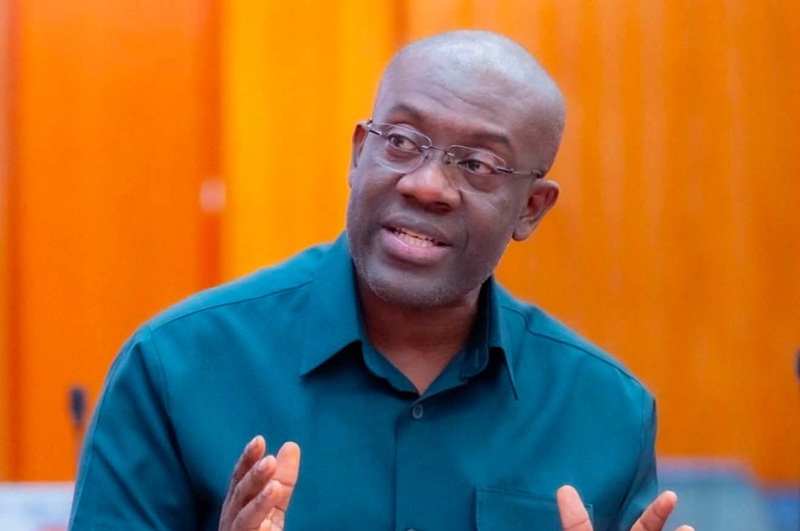
In a six-page policy statement issued on July 22, 2026, and signed by the Chairman of the NPP Policy Coordination Committee, Kojo Oppong Nkrumah, the opposition party said it had undertaken a comprehensive review of government data and concluded that the economic recovery being projected by the government was built on “props” that could not be sustained.
The statement forms part of the NPP’s preparations ahead of the Finance Minister’s Mid-Year Budget Review in Parliament.
The NPP’s criticism comes against the backdrop of the National Democratic Congress (NDC) government’s insistence that the economy has moved from stabilization to growth following the December 2024 elections.
Since assuming office, the Mahama administration has pointed to declining inflation, improved fiscal indicators and positive GDP growth as evidence that its economic management policies are yielding results.
However, the opposition argues that those headline figures fail to tell the complete story.
According to the NPP, the government’s projected 2025 primary surplus of 2.6 percent of Gross Domestic Product (GDP), which exceeded the revised target of 1.5 percent, was not achieved through improved revenue mobilization but rather through significant reductions in government spending.
The party claimed government revenue actually fell short of its revised target by 4.7 percent while expenditure was compressed by 13.8 percent, creating what it describes as an artificial surplus instead of genuine fiscal discipline.
The opposition further questioned the sustainability of the government’s economic performance, arguing that Ghana remains heavily dependent on IMF supervision despite official claims of recovery.
The statement noted that the IMF Executive Board was expected to approve Ghana’s final Extended Credit Facility review together with a new Policy Coordination Instrument, which the NPP says demonstrates that external oversight of the economy remains necessary. It also cited IMF concerns regarding state-owned enterprises, contingent liabilities, quasi-fiscal activities and the dependence on gold prices.
On economic growth, the NPP argued that the country’s recent expansion has been driven almost entirely by record-high gold prices rather than deliberate government policy.
While acknowledging the reported first-quarter growth rate of 6.4 percent, the party maintained that the mining sector accounted for much of the improvement, warning that any decline in global gold prices could expose significant weaknesses in the economy.
The party challenged the government to disclose what Ghana’s growth, trade surplus and fiscal balance would look like if gold prices returned to historical averages.
The statement also disputed government claims regarding inflation and exchange rate stability.
According to the NPP, although headline inflation has fallen compared to previous levels, prices continue to rise, with June 2026 recording three consecutive monthly increases to 5.3 percent.
The opposition further argued that the cedi had depreciated between 8.4 and 10.3 percent this year depending on the data source, warning that recent gains could easily be reversed.
Another major area of concern raised by the party relates to Ghana’s public debt. The NPP claimed inconsistencies exist between government debt figures and IMF projections, noting that while the Bank of Ghana reported debt at approximately 45.1 percent of GDP as of May 2026, the IMF projects it could rise to about 53 percent by year-end before reaching 55 percent by 2028.
The opposition called on the Finance Minister to provide Parliament with a comprehensive debt sustainability analysis and explain the methodology behind the published figures.
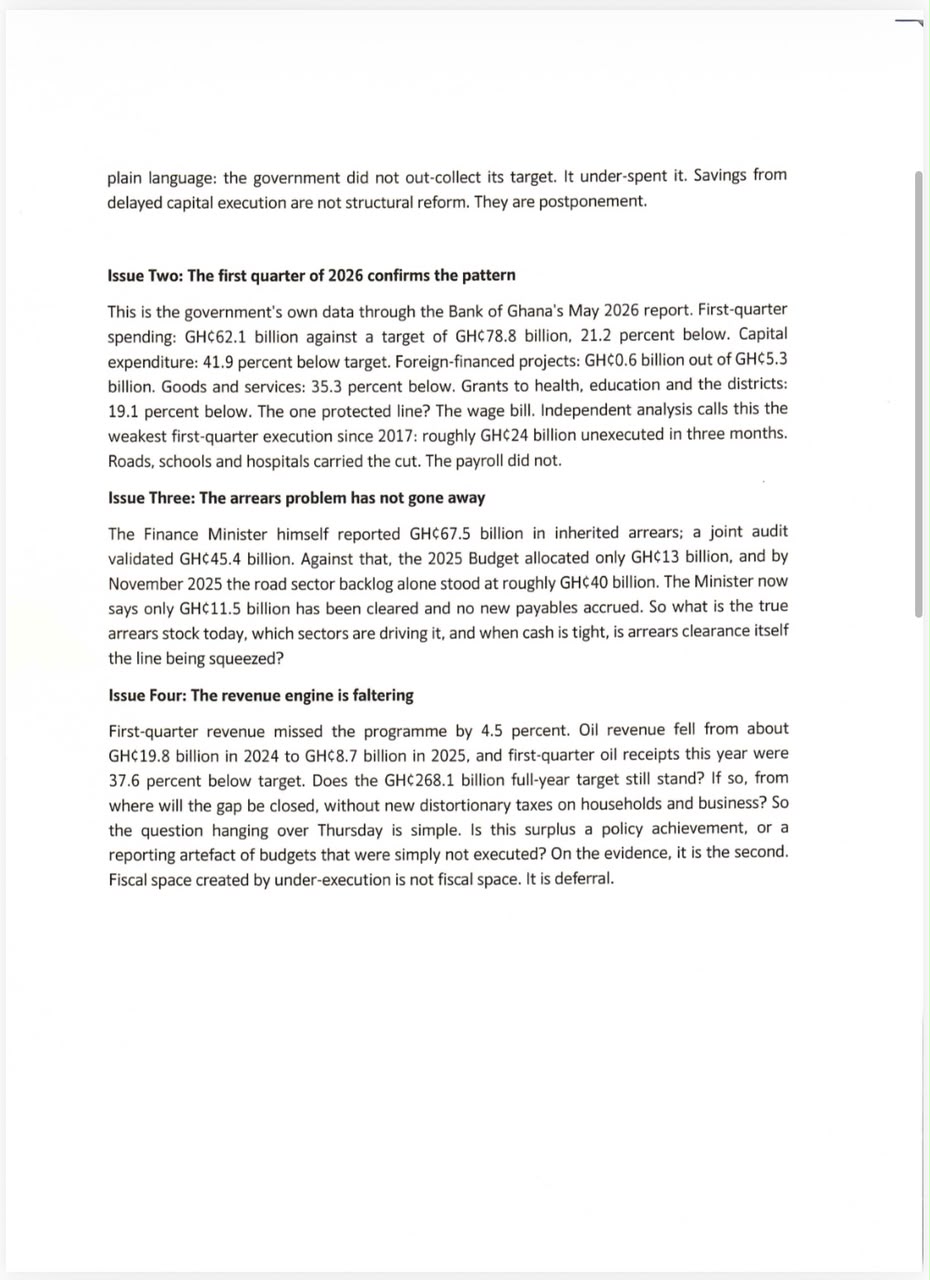
The party also accused the government of significantly underspending during the first quarter of 2026. Citing Bank of Ghana data, it alleged that government spending amounted to GH¢62.1 billion against a target of GH¢78.8 billion, with capital expenditure falling more than 40 percent below target while spending on goods and services, grants and foreign-financed projects also lagged considerably.
According to the NPP, the cuts disproportionately affected infrastructure such as roads, schools and hospitals, while the public sector wage bill remained largely protected.
The opposition further argued that inherited arrears remain unresolved despite repeated government assurances. It pointed to earlier disclosures by the Finance Minister indicating inherited arrears of GH¢67.5 billion, alongside an audit validating GH¢45.4 billion.
The NPP questioned how much has actually been paid and whether fresh arrears are accumulating as government experiences cash flow constraints.
On revenue mobilization, the NPP maintained that government collections continue to underperform, citing first-quarter revenue that allegedly missed programme targets by 4.5 percent. It also highlighted declining petroleum revenues and questioned whether government would be able to achieve its full-year revenue target without imposing additional taxes on households and businesses.
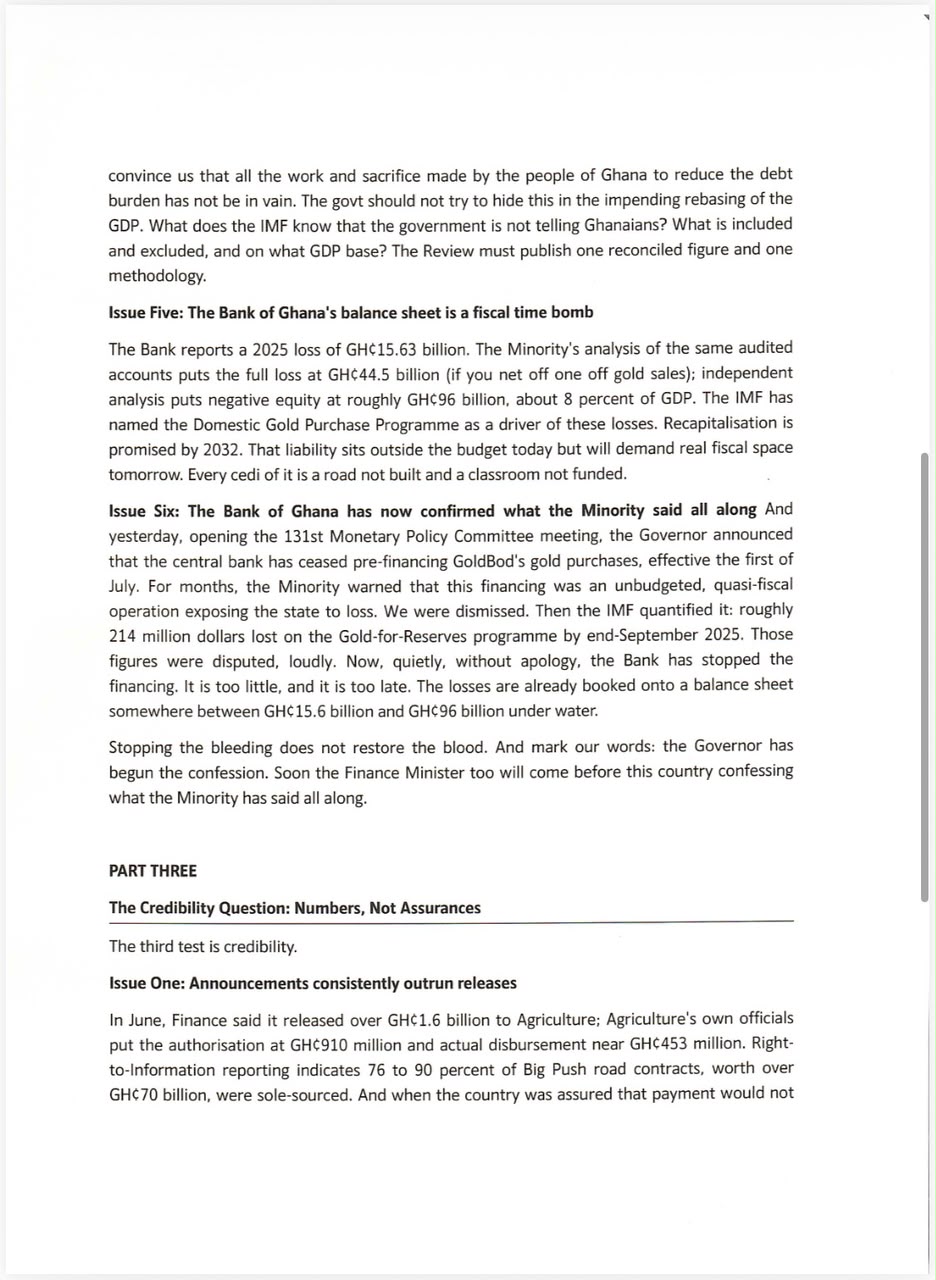
The party devoted considerable attention to the financial position of the Bank of Ghana, describing the central bank’s balance sheet as a “fiscal time bomb.” It alleged that while the Bank officially reported a GH¢15.63 billion loss for 2025, independent analysis suggested substantially higher losses and negative equity.
The NPP further claimed that the Bank’s decision to discontinue pre-financing GoldBod’s gold purchases amounted to an admission that the arrangement had exposed the country to financial risks.
The statement also questioned the implementation of flagship government programmes, including the proposed 24-Hour Economy initiative and the Big Push infrastructure programme.
The opposition argued that funding allocations and announced employment figures do not match the government’s promises, insisting that many of the reported jobs relate only to signed Memoranda of Understanding rather than actual payroll employment. It also claimed that major procurement under the Big Push programme had largely been sole-sourced.
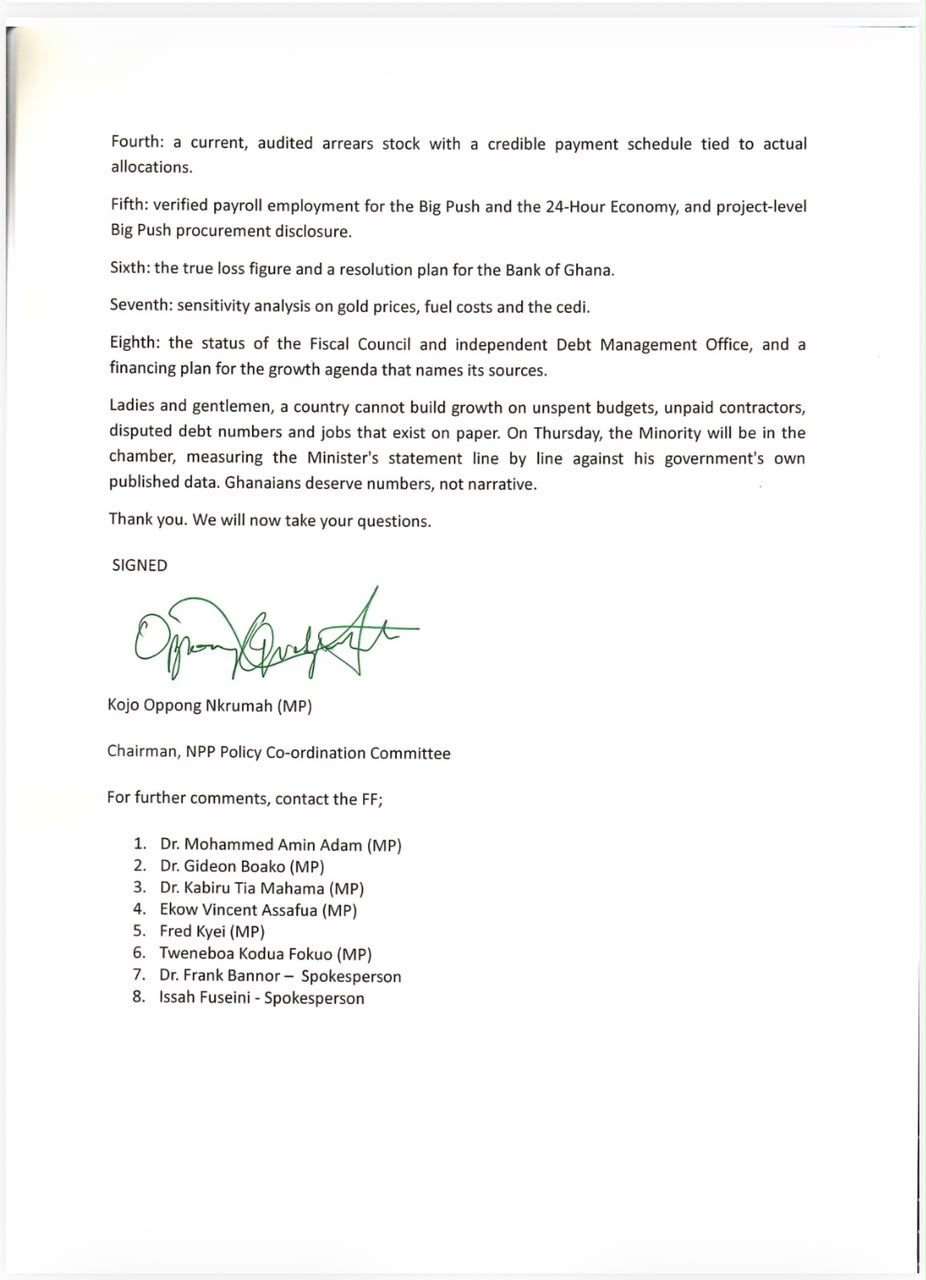
Looking ahead to the Mid-Year Budget presentation, the NPP demanded that the Finance Minister provide Parliament with detailed half-year expenditure figures, a transparent breakdown of the primary surplus, a reconciled debt-to-GDP ratio, updated arrears data, verified employment numbers for flagship programmes, the actual financial position of the Bank of Ghana, sensitivity analysis on gold prices and the cedi, and the status of proposed fiscal governance institutions.
The opposition concluded that the economic future cannot be built on what it described as “unspent budgets, unpaid contractors, disputed debt numbers and jobs that exist only on paper.”
It vowed to scrutinize every aspect of the Mid-Year Budget Review and assess the Finance Minister’s statement against what it called the government’s own published data.




COMMENTS