
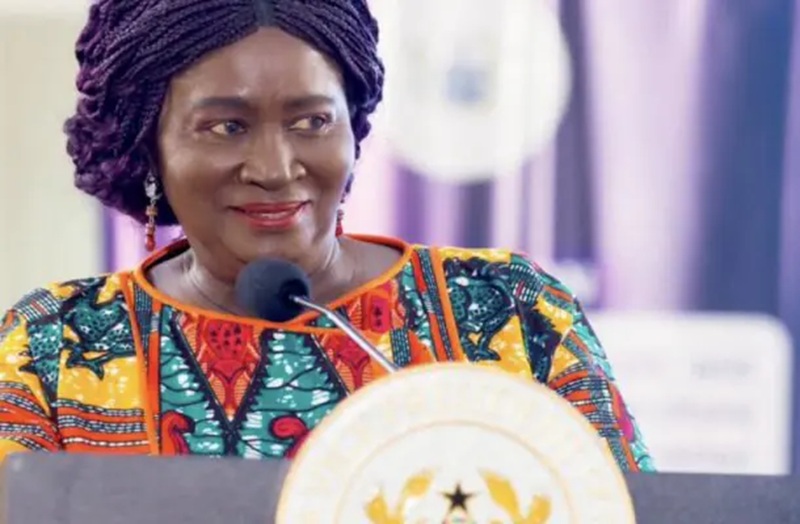
Vice President Professor Jane Naana Opoku-Agyemang has called for urgent, coordinated action to protect children from hazardous and exploitative work
Vice President Professor Jane Naana Opoku-Agyemang has called for urgent, coordinated action to protect children from hazardous and exploitative work in Ghana’s fishing industry.
She said the involvement of children in dangerous work across the fishing sector remained a major national concern, requiring collective efforts from the government, communities and other stakeholders.
Speaking at a National Inland Fisheries Conference at Fiapre, near Sunyani, she said protecting children’s rights and dignity depended on effective management of resources, firm enforcement of the law and sustained investment in fishing communities.
The conference was held to mark the 2026 World Fisheries Day and was organised by the Ministry of Fisheries and Aquaculture in partnership with the University of Energy and Natural Resources (UENR).
It was held under the theme: “Sustaining inland Fisheries for Food Security, Decent jobs and a Resilient Blue Economy.”
Professor Opoku-Agyemang said the Fisheries and Aquaculture Act, 2025, provided the legal basis for improving governance, conservation and the sustainable management of Ghana’s fisheries sector.
She highlighted the importance of the Volta Lake, which supports numerous communities whose livelihoods rely heavily on fishing and associated activities.
However, she warned that inland fisheries faced significant threats to productivity and their long-term sustainability. These included unsustainable fishing methods, intense pressure on breeding and nursery grounds, and pollution caused by illegal mining.
Those challenges, she said, threatened the replenishment of fish stocks. Poor waste management and other human activities were also damaging aquatic ecosystems and reducing water quality, while raising concerns about the safety of fish intended for consumption.
The vice-president said the effects of climate change had created further uncertainty over fish production and the availability of water. She added that inadequate storage and processing facilities were contributing to post-harvest losses and limiting the incomes of fish farmers.
She stressed that stronger institutions and sufficient resources were essential to enforcing the Fisheries and Aquaculture Act effectively.
Professor Opoku-Agyemang also pointed to the National Inland Fisheries Management Plan, which was developed to support the sustainable management and development of the country’s inland fisheries resources.
The plan includes science-based management, the protection of breeding and nursery grounds, monitoring and surveillance, and the involvement of local communities in managing fisheries.
Bono Regional Minister Mr Joseph Addae Akwaboa said inland fisheries played an important role in Ghana’s national development.
He said the sector supplied food to families, supported livelihoods, provided opportunities for women and young people, and contributed substantially to local economies. Protecting inland fisheries was therefore essential to safeguarding national food security, he added.
Mr Akwaboa said the future of the sector could not depend on goodwill alone. He called for responsible stewardship, targeted investment, innovation, effective regulation and close cooperation between the government, private sector, development partners and traditional authorities.
He also urged a firm and collective commitment to tackling overfishing, illegal fishing, pollution and the degradation of water bodies.

COMMENTS