
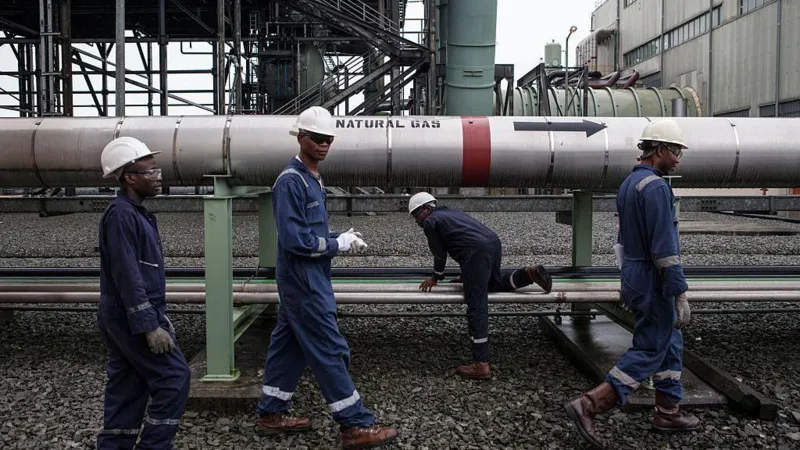
One of Africa's most ambitious energy infrastructure projects has been formally signed off, with West African leaders endorsing the long-awaited Niger
One of Africa’s most ambitious energy infrastructure projects has been formally signed off, with West African leaders endorsing the long-awaited Nigeria-Morocco Atlantic Gas Pipeline (AAGP) at an ECOWAS summit in Freetown, Sierra Leone, over the weekend.
Heads of state signed the Intergovernmental Agreement, giving the project the sovereign backing needed to move forward after roughly a decade of negotiations since it was first proposed in 2016.
Sierra Leone’s president and current ECOWAS chair, Julius Maada Bio, marked the occasion by telling the gathering, “Don’t be surprised when the gas comes your way.”
The pipeline will run nearly 6,000- 6,900 km along the Atlantic coast of 14 African nations, carrying Nigerian gas to Morocco before linking into Europe’s existing gas network via Spain and the Maghreb-Europe Gas Pipeline.
It is projected to transport around 30 billion cubic metres of gas annually to roughly 400 million consumers, with construction expected to begin in 2028 at an estimated total cost of $25bn.
The project is jointly promoted by Nigeria’s NNPC and Morocco’s Office National des Hydrocarbures et des Mines, and unlike the Trans-Saharan Gas Pipeline through Niger and Algeria, its Atlantic route largely avoids the Sahel’s most insecure areas, though offshore construction adds to costs.
Officials say the project marks a shift away from the current model in which African gas is extracted, shipped abroad for refining, and then sold back to African nations at several times the price.
Feasibility and front-end engineering studies are complete, and the route has largely been agreed, but analysts caution that financing could prove difficult, with inflation risking a rise in the $25bn price tag.
The project’s success will also depend on all member nations — plus the disputed territory of Western Sahara — cooperating to protect the infrastructure and honour their gas off-take obligations along the route.

COMMENTS