
The Ghana Railway Development Authority (GRDA) has raised fresh concerns over growing safety threats along the Tema–Mpakadan Railway Line following an
The Ghana Railway Development Authority (GRDA) has raised fresh concerns over growing safety threats along the Tema–Mpakadan Railway Line following an incident in which a passenger train struck and killed six goats, warning that continued encroachment and acts of vandalism could lead to more serious accidents if urgent action is not taken.
The Authority says the latest incident highlights the increasing dangers posed by people, animals and deliberate obstructions along the operational railway corridor as Ghana expands its modern rail transport network.
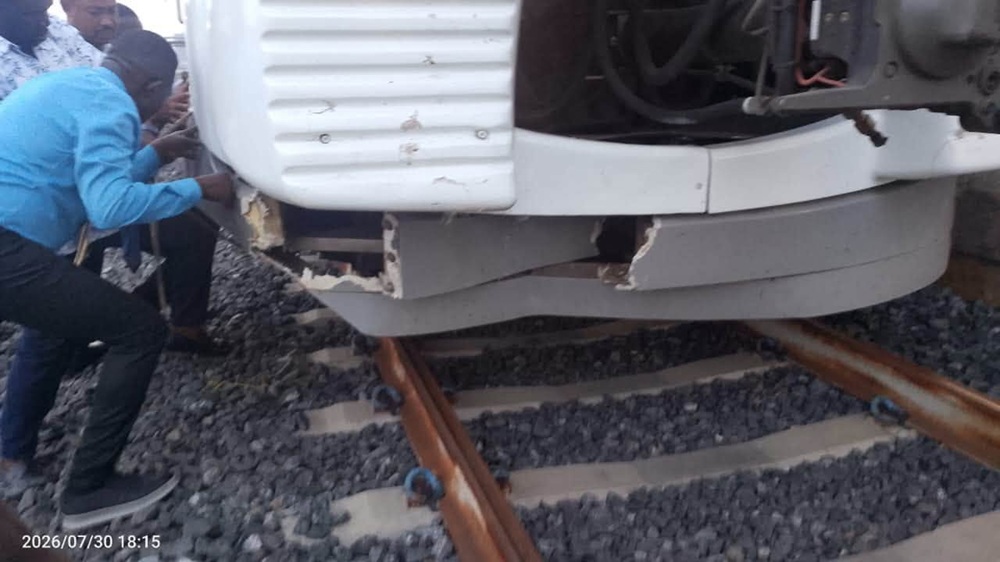
According to the Chief Executive Officer of the GRDA, Frederick Appoh, the collision occurred on July 30, 2026, when passenger train DMU002, carrying more than 150 passengers, hit the animals while travelling at approximately 45 kilometres per hour along the Tema–Mpakadan line.
Although no passengers were injured, the collision caused damage to the train, which is expected to undergo repairs before returning to service.
Speaking after the incident, Mr. Appoh stressed that trains cannot suddenly stop or change direction to avoid obstacles on the tracks because of their enormous weight, speed and braking distance.
“A train cannot simply swerve or stop instantly,” he explained, urging communities living along the railway corridor to keep people, livestock and vehicles away from the tracks.
He warned that continued disregard for railway safety regulations poses a serious threat to both railway operations and public safety.
According to him, the Authority has in recent months recorded several worrying incidents involving encroachment onto the railway corridor.
He disclosed that in one incident, an individual remained seated on the railway track despite repeated warnings from an approaching train, forcing railway personnel to physically remove the person moments before the train arrived, thereby averting what could have been a fatal accident.
Beyond accidental encroachment, Mr. Appoh revealed that the Authority has also documented deliberate acts of interference with railway operations.
He said more than six incidents of stones being thrown at moving trains have been recorded, while authorities have also identified 11 separate cases where stones were intentionally placed on the railway tracks.
According to him, such acts significantly increase the risk of derailments and other serious accidents, particularly as Ghana prepares to introduce heavier freight train operations on the route.
Mr. Appoh explained that while the current passenger trains generate about 750 kilowatts of power, the freight locomotives expected to begin commercial operations will produce approximately 2.25 megawatts (3,000 horsepower) and haul substantially heavier cargo.
Because of their enormous weight and momentum, he said, freight trains require much longer stopping distances and cannot avoid people, animals or vehicles that stray onto the tracks.
The GRDA CEO also expressed concern over persistent vandalism of newly installed protective fencing along sections of the railway corridor.
He disclosed that although fencing projects are ongoing in critical areas to improve security, some sections have already been deliberately destroyed, particularly during the night.
To address the growing safety concerns, the Authority has deployed railway security personnel between stations to monitor activities, educate communities and prevent unauthorised access to the railway corridor.
Mr. Appoh said the GRDA is also working to secure additional funding to extend fencing to other vulnerable sections of the Tema–Mpakadan Railway Line.
However, he emphasised that infrastructure alone cannot guarantee railway safety without the cooperation of the public.
“We can engineer a safer railway, but we cannot engineer away indiscipline,” he stated.
The Tema–Mpakadan Railway Line forms a key component of the railway modernisation programme aimed at improving passenger transportation, facilitating freight movement and strengthening the country’s logistics and industrial development.
Since passenger services commenced on the standard gauge line, railway authorities have repeatedly appealed to residents, motorists, livestock owners and communities along the corridor to observe safety regulations and avoid actions that endanger lives and disrupt railway operations.

COMMENTS